Wednesday, September 30, 2015

Day +14: Engraftment!

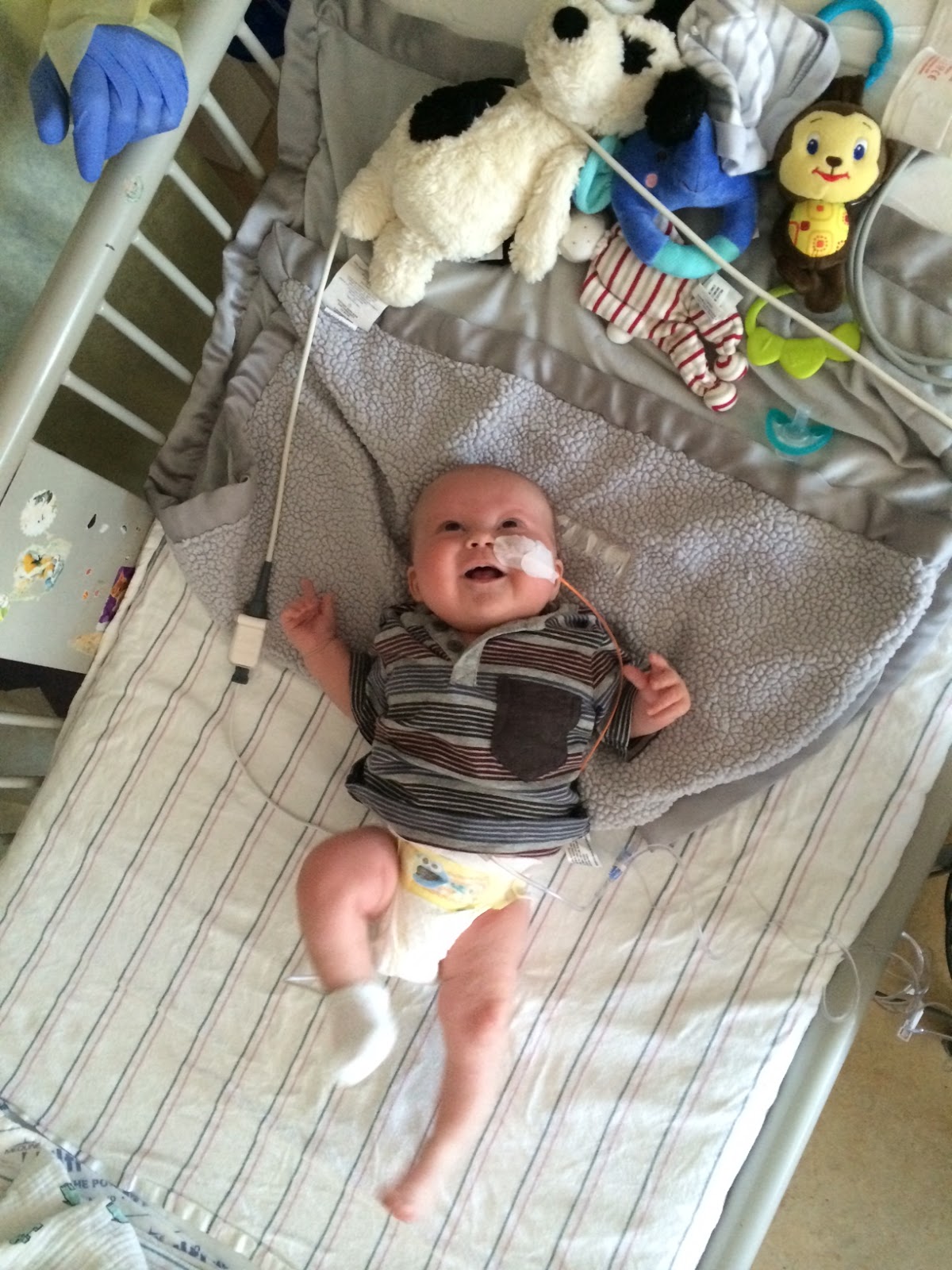
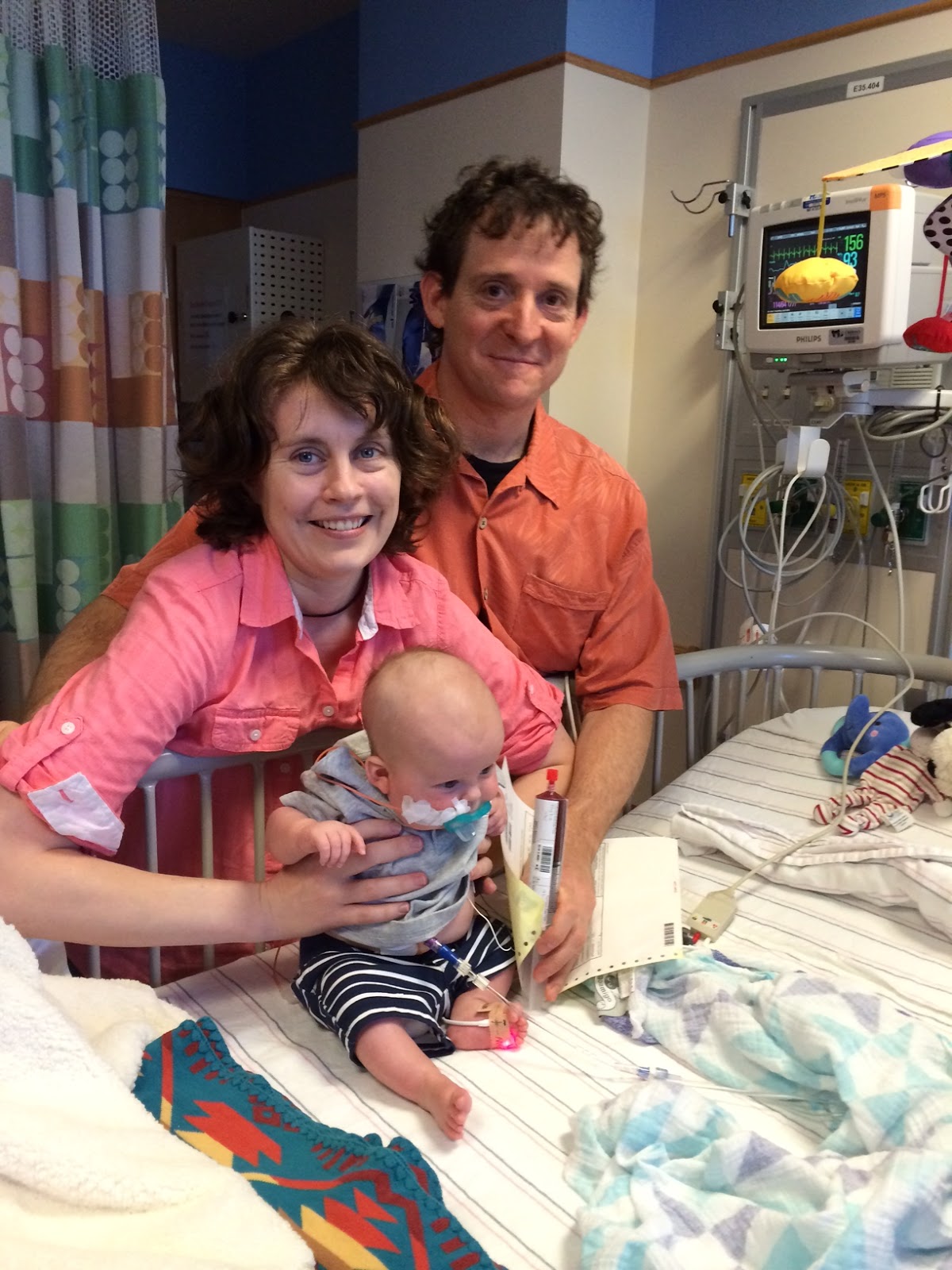
Sam, sporting camo-colored Sea Bands (which are supposed to reduce nausea*) and an unintentionally matched Where the Wild Things Are shirt.
Two weeks since the transplant and 28 days since the transplant process began, we are seeing good progress:
  • The chemo side effects, including the associated discomfort, seem mostly to be gone. We're trying to reduce Sam's morphine dose so that he remains comfortable but not dopey. (Against the odds, he seems to have kept most of his hair.)
  • Sam's ANC, a measure of white blood cells that fight infection, is increasing very rapidly. By design, it was slowly reduced by the chemo from about 6000 to nearly zero. At its nadir a week ago it was 40; today it's above 5000. Sam has months before his immune system will be at full strength, but he's off and running.
  • Because his ANC has been above 500 for three straight days, he has reached an important milestone: the donor cells have officially "engrafted"--made their way to Sam's bones and started producing new blood cells.
  • Although he gets fevers every few days (and is promptly medicated and tested for infection), Sam has yet to test positive for anything except the common cold.
  • Near as we can tell, Sam does not feel any discomfort from the fractured vertebra.
Several big questions won't be fully answered for weeks or months:
  • Sam's donor was perfectly matched, but how good and permanent is the engraftment? The first of several ongoing "chimerism" tests has been sent to a lab in Minnesota, results to be returned in three or four days. The eventual goal is for the ratio of Sam's blood to donor blood to be heavily weighted toward the donor--evidence that Sam's blood comes from the donor's marrow and not his own (i.e., good engraftment). 
  • Will he get graft-versus-host disease, and how much?
  • Will we successfully avoid infections while he's still so compromised?
Meanwhile, life goes on...

Mom reading Sandra Boynton's Barnyard Dance! to a possibly alert audience.

* No damned idea how.

Saturday, September 26, 2015

Day +10: Back to the minefield

Yesterday reminded me of the earliest days of this little adventure, when I was still reeling and taken aback every time there was yet another complication or side-effect to Sam's condition.

Sam is still on oxygen--has been for about a week. He's on the lowest possible amount, and only needs it sometimes, but he hasn't been able to kick the habit even though the assumed cause of the problem, his head cold, seems to be fading. Docs have not perceived anything with the stethoscope or chest x-rays, so they gave him a CT scan.

They saw nothing of concern in Sam's lungs, but they did see something wholly unexpected: a compression fracture of one vertebra (T-8). Given his size (12 lbs.) and understandably sedentary lifestyle, the only plausible explanation we've been given is that Sam's bones have been weakened from the steroids he's been getting on and off for three-plus months, when they were used in "massive quantities" (our doc's words) to fight off the HLH and keep it suppressed before the transplant.

Sam is not evidently in pain, and there's not much to do about the fracture*--we don't need to put him in a brace, subject him to surgery, restrict his movement, hold him only in certain ways, etc. The docs don't seem alarmed by the fracture, but they are going to start increasing his Vitamin D and calcium intake and try--or at least hope--to minimize Sam's exposure to steroids.

Even so, we still have no idea how it happened or if it's going to happen again. And, if it does, how or if we'll know it. It may be true that weak bones are an expected side effect to prolonged exposure to steroids, but that is only minimally reassuring, if at all. And no matter what we hope to do, it's unlikely that we'll be able to forego steroids, which are a big part of the post-transplant regimen. So Sam will continue to be fragile (but how fragile?) for the foreseeable future.

Fortunately, the news is not all bad. The mucositis does not seem to have gotten worse, and we're not seeing any of the other chemo side-effects. It's obvious that Sam doesn't feel well, but he sleeps a lot and doesn't have to suffer through it much.

Even better: today's lab tests showed early indications that his body is gearing up to produce blood again--i.e., that the transplant is taking hold. This is exciting news, but it also comes with a price: if engraftment occurs too quickly, Sam may experience "engraftment syndrome," whose symptoms (fever, rash, fluid retention) aren't serious, but which would be treated with medications that come with their own risks: diuretics, which are starting to take a toll on Sam's kidneys; and, yes, steroids.

In short, we are now treating the treatment and fighting the side-effects as much as the original diagnosis. Or, as my mom put it, "walking a tight rope."

* I had a compression fracture of two vertebrae when I was 20--skiing accident. I was taken to the hospital, given a shot of Demerol (which I highly recommend), and sent home the same day, presumably with a prescription for something less awesome than Demerol. That was it. There was (very) slight lingering pain and stiffness for a few years, but nothing more.

Wednesday, September 23, 2015

Day +7: Rock bottom?

No, that's not another reference to Sam's butt. It's a reference to the fact that Sam appears to be getting into the worst of the chemo's side effects. He had a terrible night last night. As Alyson described it, Sam was "either crying or sleeping, and not much sleeping." The discomfort is assumed to be from mucositis--sores in his GI tract that make sucking, eating, and pooping painful.

His morphine dose was increased, and this has made a big difference. He's been sleeping most of the day, and his awake time--what little of it there was--was peaceful if not sunny. We are not thrilled that he's back on opiates given the difficulty we had in late July, but it's worth it if he's comfortable.

Sam had a slight fever again this morning, which prompted another round of blood cultures, tests to see if he's viral (results still pending), and prophylactic antiobiotics. He's also got a half dozen ball bearing-sized bruises around his body which staff are at a loss to explain definitively. The bruises may be related to Sam's depressed platelet levels (or some other problem with his blood's ability to clot), but that's just a theory at this point; we're keeping an eye on 'em.

On the plus side, his oxygen saturation is back to normal (the cannula was turned off and removed from his face), and the cold he's been fighting seems to be improving; he's less congested in the head.

And it's worth noting that if Sam is getting into the worst of it--if he's actually hitting rock bottom--then we're that much closer to getting out of the worst of it.

Tonight is my night to sleep at the hospital. After Alyson and my mom went home, I walked over to Columbia Heights to find dinner and be outside for awhile. On the way I passed a place advertising the following deal:


Somehow I mustered the strength and willpower to keep walking.

Sunday, September 20, 2015

Day +4: Sam's butt and other important topics

Sam's diaper rash is now completely under control, thanks to a laborious butt-care regimen started and described 10 days ago. In fact, his little tuches looks so good that he's famous around the floor.

Sam's hind quarters during re-application of skin protectant. (It's not just my eyes that he inherited.)

In other, less salacious news, Sam tested positive for rhinovirus (essentially the common cold) the day after transplant. He's congested and has a cough, but the doctors are unconcerned--pretty ironic given all the concern expressed about preventing infection while Sam has no immune system.

His weight is holding steady at 5.4kg. This is also a good sign--it means he's not retaining fluids as much as he was a few days ago, when his weight had gone up to 5.7kg. His BP vacillates between normal (90/60) and not-so-great (125/70), but hypertension isn't unexpected under the circumstances*. He struggles to keep his oxygen saturation above 95% (the congestion?), so he continues to wear the oxygen cannula.

And, yes, he still has hair. His ANC is continuing to drop, however, which means the chemo he stopped getting a week ago is still working through his system and will eventually reveal itself in the form of unpleasant side effects, like mucositis and, presumably, hair loss.

Sam is comfortable and in good spirits. When he's awake he's nearly always happy and smiling. He loves the mobile above his bed, which he watches very intently.

Down for the night. Or at least until he coughs himself awake.

I suppose all the attention given to vital signs, etc. is tedious to read about, but it's nothing if not illustrative of our day-to-day: lots of navel gazing.

* The downside is that the diuretics he's getting to fight fluid retention and hypertension are leaving calcium deposits in his kidneys that might eventually lead to kidney stones.

Friday, September 18, 2015

Day +2: Pix of Sam


Sam, going nowhere fast. The sock helps keep the oxygen saturation sensor affixed to his foot...but only a little.

Sam and a grandmother.

Sam and another grandmother.


Thursday, September 17, 2015

Day +1: Transplant complete

Sam's transplant happened yesterday on schedule, five months after his birth and three after his diagnosis. The donor cells arrived from San Diego early in the morning, and by 11:30 he began receiving the first of two 30ml transfusions. Sam's nearly always being infused with one thing or another (chemo, steroids, anti-fungal meds, anti-bacterial meds, meds to ward off graft-versus-host-disease, diuretics, hypertension meds, blood products of one type or another) so the transplant was, by appearances, sort of a non-event--just more stuff in a syringe being pumped into Sam's little body.

Mom, Dad, Sam, and 30ml of stem cells (in my left hand).

At about 3:30 the second empty syringe was removed, the catheter flushed with saline, and the procedure we'd been looking forward to with both hope and anxiety--a procedure that will either save Sam's life, or won't--was over.

Sam took it well--no fever or other adverse reactions. He then had a bath, his fourth wardrobe change (he may have the makings of a new immune system, but he still doesn't have any bowel control), and a snack. At about 6:30 we went home for the night, leaving Sam in the very capable hands of one of our favorite nurses.

Sam and Mom, transplant in progress.

Alyson and I then went out to dinner to celebrate the milestone and reflect back on how much has happened since June. Things have gone well, relatively speaking, and we're obviously hopeful that our good fortune will continue. There's not a lot to do now for the next few days, weeks, and months but fight off infection; hope the stem cells engraft and start to create a new, properly functioning immune system; hope for minimal graft-versus-host-disease; and, of course, wait to hear that the HLH is indeed gone, gone, gone from Sam's system--in other words, that he is cured.

This morning we received news that Sam had become slightly febrile and that the oxygen saturation in his blood had dropped enough to warrant a return of the dreaded (for Sam as well as anybody who's in the room and has to listen to the beeping monitor) oxygen cannula. Staff are not concerned--reactions like this are common after transplant. The fever's now gone, but Sam is still wearing the cannula. We hope it won't be there for long.

Sam's been a bit more subdued today, but he had some good smiley time and has yet to show any significant chemo-related side effects. The nurses occasionally have a Who has the cutest patient? contest. Sam is a repeat winner.

Saturday, September 12, 2015

The hospital: it's easier this time*

So far, this admission seems to be a lot less difficult than the first one. I think there are several reasons.

First, we are no longer in shock, and no longer worried that we might lose our newborn son in a matter of days. Back in June, Sam's fate felt, and I think was, very uncertain. (In the days after his diagnosis, I told my dad and brother, without any melodrama, that they if they wanted to meet Sam--ever--they shouldn't wait to plan a visit.) We still have a long way to go, but I certainly don't feel that Sam's situation is as tenuous as it was then.

It's true that we are months from being out of the woods, and that we still have to make it through a dangerous procedure that not all patients survive. It's also true that if the donor cells don't engraft properly, the HLH could return and cause a lot more damage to Sam than it did the first time.

Sam and Alyson, not long before the former shat on the latter.

But we're no longer reeling. We can see light at the end of the tunnel. (It's a long tunnel, but there's still light down there.) Moreover, Sam is in very good shape going into transplant. The HLH appears to be effectively dormant, and Sam has a perfectly matched donor. Whereas the doctors used to be very cautious about his prognosis (HLH is a humbling disease, they said), they are now upbeat and confident about his recovery. The future simply looks a whole light brighter than it did in early June, when we had no idea how this would really play out, but plenty of dark thoughts about how it might.

We're also more comfortable. The hospital is a dismal place to spend hours upon hours, but we've adapted a bit. We bring more food from home instead of scavenging through the hospital cafeteria's frequently dismal offerings. The big chair--the one we use to hold and feed Sam in--is better, more comfortable, than the last one. It rocks, and when it's in the reclining position it doesn't try to close up like a clam shell. Maybe best of all: since Sam has not needed to have his respiration, heart rate, and oxygen saturation monitored 24/7, we are not tortured by loud and seemingly relentless monitor alarms. None of these things is debilitating on its own, but in concert they were exhausting to cope with precisely when our coping skills were under severe duress.

Finally, Sam. When he was first admitted in June, he was still more or less a blank slate. He had just started to smile and make eye contact, but did neither very reliably. We were still sleep-deprived and felt very much lost at sea vis-a-vis our parenting skills. Sam consumed more of our energy than he gave back. Now, 12 weeks later, he's all smiles, and that makes us smile and laugh--a lot. We now feel a lot of joy being with Sam, and that makes spending hours and hours trapped with him in a hospital room a bit less dismal. (I'd give anything to be able to take him outside for a walk, but that's never going to happen.)

The next two or three weeks are likely to be pretty difficult, but I'm hopeful that we'll be in better shape to handle it all than we were earlier this summer.

P.S. Fun bone marrow transplant fact: Sam's original blood type (O-pos) will change to the donor's type, A-pos.

* But it still sucks.